



At the centre of this is a simple issue. The structure that determines how growth is meant to happen is often never designed in the first place. It is set much earlier, in how businesses structure their marketing and the partners they bring in. Most organisations do not struggle because agencies are incapable. They struggle because they have adopted a model that was never designed to deliver consistent, measurable growth.
This is not to say execution never fails. It does. Campaigns miss, creative underperforms, and channels are often poorly managed. But more often than not, execution is where the problem becomes visible, not where it originates. Teams are asked to deliver outcomes inside a system that was never designed to support them.
What presents as progress is often just movement. Capability is rarely the constraint; most businesses today have more than enough of it. They have internal teams, external partners, and an expanding stack of tools and platforms. The issue is how all of that is organised. Strategy is separated from execution, channels are managed independently, and performance is assessed in fragments. Each part may function, but nothing connects them into a coherent whole.
The result is predictable. Even when individual elements perform, the overall outcome does not hold. Growth feels uneven, difficult to explain, and harder to scale. Faced with that, the default response is to increase activity. More campaigns are launched, more testing introduced, more channels added. It feels like progress, but it rarely resolves the issue, because the problem is not effort. It is alignment.
That misalignment is not accidental. It is embedded in how businesses engage marketing. Specialists are brought in to solve parts of the problem, performance is measured within those parts, and responsibility is distributed across multiple providers. Each contributor can point to their work, but no one owns how those contributions combine to produce a commercial outcome. Fragmentation is built in from the start.
This is why organisations end up circling the same question. Investment is being made, activity is visible, metrics are improving, yet the link to growth remains unclear. Not because nothing is working, but because nothing is working together. Marketing operates as a collection of activities, rather than a system designed to produce an outcome.
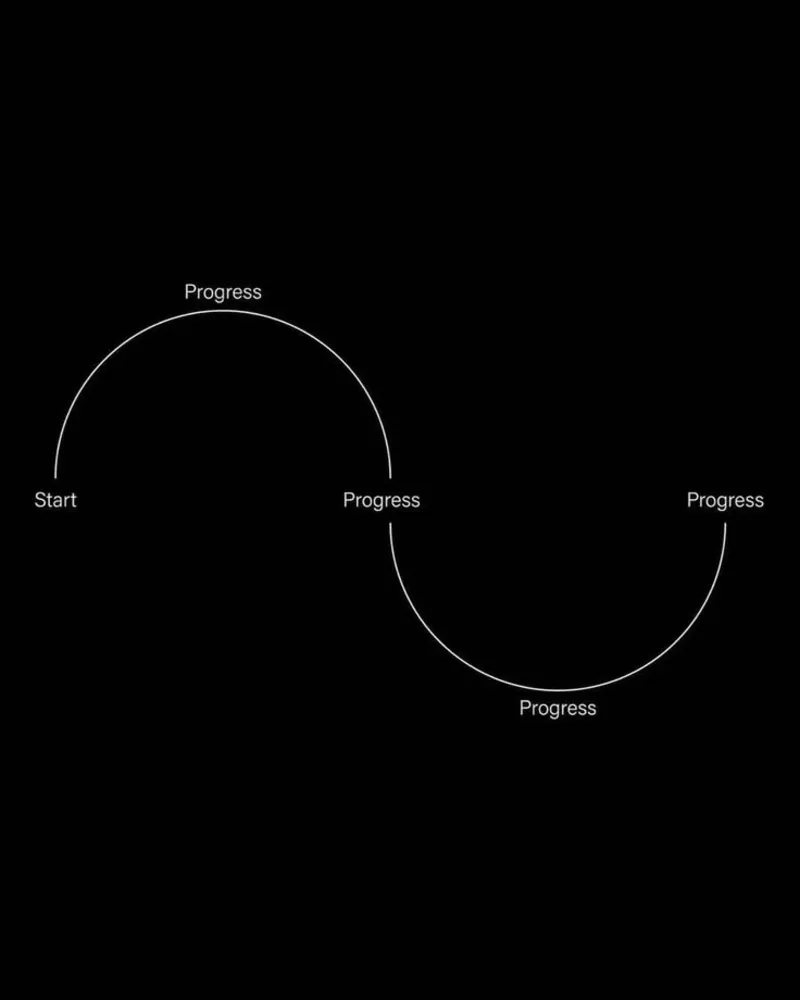
Growth does not occur within channels in isolation. It emerges from how decisions interact across the whole. When positioning informs creative, creative supports conversion, conversion informs investment, and performance feeds back into strategy, the system begins to reinforce itself. Where those connections are missing, even strong channel performance struggles to translate into meaningful impact.
The root cause is almost always a lack of clarity at the outset. Execution begins before key decisions have been resolved. Priorities remain unclear, positioning is loosely defined, and there is no shared understanding of what actually drives growth. Activity fills the gap. Speed becomes a substitute for direction. But speed without clarity does not accelerate results; it compounds misalignment.
A deliberate approach starts differently. Clarity comes first, not as a document, but as a framework that shapes every decision. It determines what is worth doing, what should be deprioritised, and how the system is meant to operate. Without it, marketing remains reactive, driven by channels and short-term signals rather than intent.
Structure matters just as much as decisions. Fragmentation has become the default, with multiple agencies, internal teams, and platforms contributing to the outcome, but no one owning how the system performs. Responsibility is shared, which in practice means it is diluted.
Viewed this way, the issue becomes clearer. Businesses are not choosing between agencies. They are choosing between models. They can manage the system internally, coordinate specialists, or work with a partner who owns how the system performs end to end. Outcomes are shaped far more by that choice than by the capability of any single provider.

Once this is understood, the instinct to increase activity becomes easier to challenge. When growth feels uncertain, expansion is the default, but rarely the answer. More volume introduces more variables, more noise, and often more fragmentation. The more effective move is constraint. Fewer initiatives, clearer priorities, and a stronger link between decisions and outcomes. Better decisions outperform more activity.
Growth is not created in a single moment of execution. It is built over time through testing, learning, and refinement. For that process to compound, it must sit within a system that holds together. Without it, each cycle resets. With it, performance builds, becoming clearer, more predictable, and more efficient.
This is the difference between activity and engineering. When growth is left to disconnected efforts, it will always feel uncertain. When it is deliberately designed, aligned, and held with accountability, it behaves very differently. Decisions become clearer, effort becomes more focused, and outcomes become repeatable.
Most businesses do not have a marketing problem. They have a growth design problem. Until the structure that connects decisions to outcomes is clear, and ownership of that system is established, execution alone cannot make growth consistent.
When those conditions are in place, the shift is immediate.
That is what it means to make growth deliberate.